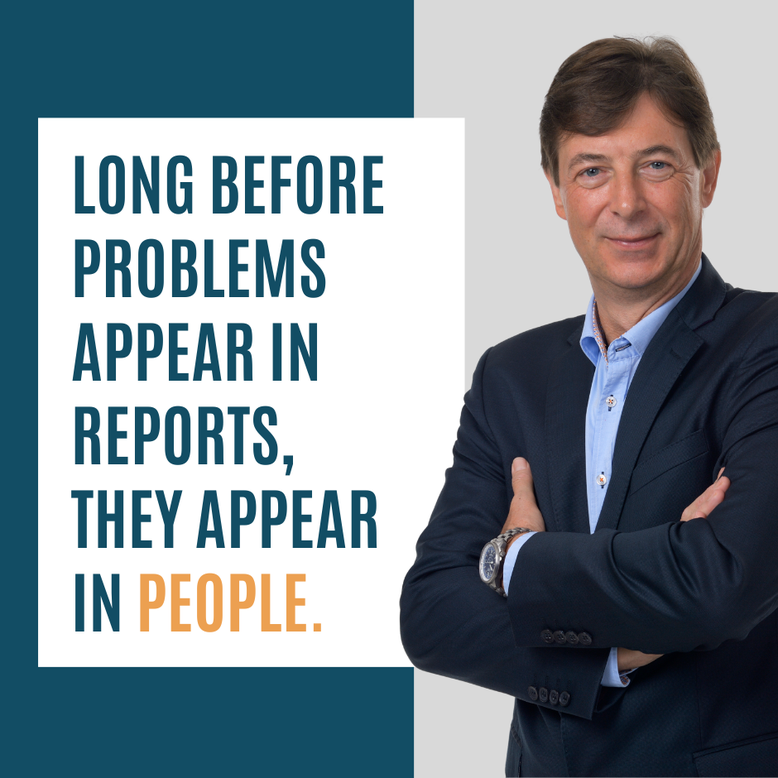
The most dangerous phase of a project is not when everybody panics.
It’s when people stop saying what they really think.
I have seen delayed projects recover.
I have seen serious technical problems get solved.
But once a project becomes political, things get dangerous.
It starts when people protect positions instead of discussing the real situation openly. When optimism quietly becomes an expectation. And when difficult conversations move secretly into corridors after the meeting is over.
You can feel it when walking the site:
The atmosphere changes.
People become careful.
Answers become shorter.
That is why leaders cannot manage projects only through dashboards and management meetings.
You need to walk the site. Regularly.
Talk to people.
Listen carefully.
Create trust.
And pay attention to what is NOT being said.
I remember one project where I was brought in during a difficult phase:
Officially, the project was still “green.” But after a short time on site, it was obvious that the project needed more openness and more honest communication.
Later that day, an experienced supervisor quietly pointed out a developing interface problem between teams.
No drama. No politics. Just experience speaking honestly.
And he was right.
Because people spoke openly early enough, we were able to intervene before the situation escalated. That conversation probably prevented months of unnecessary delays and difficult discussions later.
I have enormous respect for the supervisors, construction managers, commissioning teams, planners, operators, and engineers carrying responsibility on project sites every day. They often see reality long before the reports do.
Good project leadership starts with presence, active listening, trust – and the humility to hear uncomfortable truths early on.
Not hierarchy.
Kommentar schreiben